
Why Viagra Stopped working for me & What to look forward to.
If Viagra worked well at first and now feels unreliable, you are not imagining it and you are not alone. A 2001 Journal of Urology study following men on long-term sildenafil found 20% needed a higher dose to get the same result, and 17% stopped using it altogether. Here is what the research actually says about why that happens, and where Ayurveda’s centuries-old Vajikarana tradition, and iRed Massage Oil specifically, fits in as a natural, complementary option, not a replacement for your doctor or your prescription.
Key Takeaways
- Losing effectiveness from a medication that once worked well is common and has a documented physiological explanation. It does not automatically mean your erectile dysfunction is getting worse.
- A 2001 Journal of Urology study found the average time to sildenafil efficacy loss was about 11 months, with 20% of men needing a higher dose and 17% discontinuing use entirely.
- Up to half of apparent Viagra “failures” trace back to how the medication was taken, not true tolerance.
- Ayurveda’s Vajikarana tradition includes herbs such as ashwagandha and saffron with real clinical research behind them, used alongside, not instead of, prescribed medication.
- Evidence quality varies by herb. This article is transparent about which herbs have human trials, which have animal data only, and which rely on traditional use.
Why Viagra Effectiveness Can Decline Over Time
The medical term for a drug losing its punch after repeated use is tachyphylaxis, and it is well documented with sildenafil. The 2001 Journal of Urology study (PubMed 11490248) is the most cited evidence here: among men on long-term sildenafil, efficacy loss ranged from 15% to 50%, averaging 36% over a two-year follow-up. Researchers proposed that chronic use may cause penile smooth muscle to upregulate PDE5 enzyme expression, essentially producing more of the enzyme the drug is designed to block. Over time, the same dose has more enzyme to compete against, so the effect weakens.
That 30-35% ineffectiveness figure comes from a separate 2020 review in Aging and Disease (PMC7505261), which found PDE5 inhibitors as a class fail to work adequately in at least three of ten men with erectile dysfunction, even outside the tolerance question. So the picture is broader than tolerance alone: some men never respond fully, some respond well and then lose ground over months, and some run into a completely different problem.
That different problem is usage error, and it should be ruled out before you assume your body has built a resistance to the drug. Clinical literature reviewed in publications like the Cleveland Clinic Journal of Medicine points out that up to half of apparent PDE5-inhibitor failures come down to how the medication is taken rather than true drug failure. Sildenafil needs to be taken on a relatively empty stomach for reliable absorption, since a heavy or fatty meal can delay it significantly. It also requires actual sexual stimulation to trigger the nitric oxide pathway it works through; it does not create arousal on its own. Some men also give up after one or two disappointing attempts, when prescribing guidance typically suggests six to eight tries at an adequate dose before concluding the drug is not working.
Then there is a third possibility, and it deserves the most attention: the underlying cause of your ED may be progressing. Sildenafil increases blood flow, but it does not treat root causes. Atherosclerosis tends to worsen with age and cardiovascular risk factors. Diabetes, poorly controlled, damages the same small vessels and nerves involved in erections. Testosterone naturally declines with age. Nerve damage from surgery, injury, or neuropathy can interrupt the signal entirely. Psychological factors, particularly stress and performance anxiety, can undermine a medication that is otherwise working as designed. None of these are things a PDE5 inhibitor was built to fix, which is exactly why “why did Viagra stop working for me” so often does not have one simple answer.
Ayurveda as a Natural, Complementary Path
Ayurveda has addressed male vitality for thousands of years through Vajikarana, one of the eight classical divisions of Ashtanga Ayurveda. Vajikarana is not framed around a single symptom the way modern pharmaceuticals often are. It focuses on strengthening the body’s broader systems, stress resilience, hormonal balance, circulation, tissue nourishment, on the premise that sexual health is downstream of overall constitution rather than isolated from it.
Be clear about this: an Ayurvedic formulation is not positioned as a substitute for sildenafil, and nobody should stop a prescribed medication to try one. The two operate on different principles. Sildenafil produces a pharmacological, on-demand increase in blood flow. Herbal Vajikarana formulas work more gradually, supporting the body’s stress response, hormone levels, and tissue health over weeks of consistent use, which is why they are best thought of as a complementary layer alongside medical care and an open conversation with your doctor, not a replacement for either.
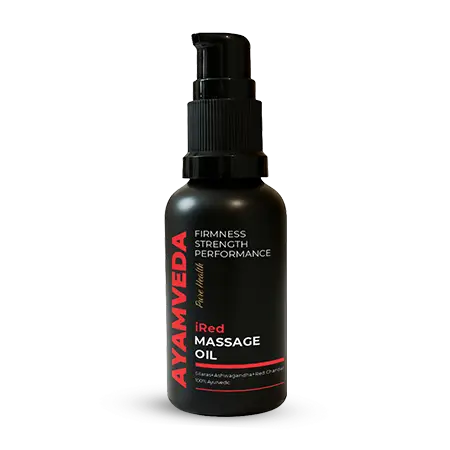
Trust matters enormously in this category. A market-testing study on herbal “ED cure” supplements sold in Ghana, published via ScienceDirect, found that 90% of products tested were illegally adulterated with undeclared sildenafil or tadalafil, meaning the “natural” product was secretly spiked with the very pharmaceutical it claimed to replace. That is a serious safety issue, since undisclosed PDE5 drugs can interact dangerously with nitrate medications. It is why regulatory registration matters. iRed Massage Oil is registered with India’s Ministry of AYUSH, formulated by Dr. J. Preet, B.A.M.S., using more than 60 classical Ayurvedic herbs manufactured in a WHO-GMP certified facility. It is a topical wellness oil, not a pharmaceutical, and it does not contain undeclared PDE5 drugs of any kind.
Ingredient Science: What the Research Actually Shows
iRed Massage Oil draws on more than 60 traditional herbs, but rather than make sweeping claims about all of them, it is more useful, and more honest, to look closely at a handful of the better-known ones and grade them by the strength of evidence behind them.
Animal studies only no human trials yet
Traditional use only no modern trials found
| Herb | Evidence | What the research shows | Source |
|---|---|---|---|
| Ashwagandha Withania somnifera |
Clinically studied | Improved erectile function score, sexual desire, and reduced stress/cortisol in multiple human RCTs. A dedicated trial in diagnosed psychogenic ED did not beat placebo. | Frontiers in Reproductive Health (2026); Health Science Reports (2022); BJPsych Open (2024/2025); Frontiers in Pharmacology (2023) |
| Saffron / Kesar Crocus sativus |
Clinically studied | The strongest ED-specific human evidence reviewed here. A meta-analysis of 6 RCTs found a significant pooled improvement in erectile function. | Avicenna Journal of Phytomedicine (2018); Phytomedicine, Shamsa et al. (2009) |
| Akarkara Anacyclus pyrethrum |
Animal studies only | Male rats given an alkylamide-rich extract for 28 days showed significant increases in testosterone, LH, FSH, and sperm parameters. No human trials exist. | Phytotherapy Research (2013) |
| Nagkesar Mesua ferrea |
Traditional use only | No sexual-health-specific human research located. Used traditionally in Ayurvedic Rasayana (vitality) formulas. | Classical Ayurvedic use |
| Silaras | Traditional use only | No sexual-health research located. Traditional topical, warming ingredient in Ayurvedic formulations. | Classical Ayurvedic use |
| Atibala Abutilon indicum |
Traditional use only | A reputed traditional aphrodisiac in classical texts. No verified pharmacological or clinical data found, even at the preclinical level. | Classical Ayurvedic use |
Ashwagandha has the most well-rounded body of research behind it. An RCT published in Frontiers in Reproductive Health in 2026 gave 76 healthy men aged 30 to 50 either 300mg of ashwagandha twice daily or a comparator for eight weeks and found statistically significant improvement in IIEF erectile function score, sexual desire (SDI-2), and the DISF-M sexual function index. A separate 2022 RCT in Health Science Reports gave the same dose to 50 men with low sexual desire and found a significant increase in serum testosterone (p<0.0001) along with improved sexual desire scores. A 2024/2025 meta-analysis in BJPsych Open, covering 15 studies and 873 patients, found ashwagandha reduces perceived stress, anxiety, and serum cortisol, all of which matter for sexual performance given how directly stress interferes with it.
What ashwagandha has not shown is an ability to outperform placebo as a targeted treatment for diagnosed psychogenic erectile dysfunction. A trial cited in a 2023 Frontiers in Pharmacology review tested 500mg of ashwagandha three times daily for 60 days in 95 men specifically diagnosed with psychogenic ED and found no advantage over placebo on that clinical endpoint. That should be said plainly rather than glossed over: ashwagandha appears to support the body’s broader vitality systems, stress hormones, testosterone, and general sexual desire, rather than acting as a targeted erectile dysfunction drug the way sildenafil does. So is ashwagandha a “natural Viagra”? Not in the mechanistic sense. It does not work the way sildenafil works, and it should not be understood that way. It works differently, more slowly, on different parts of the system.
Saffron carries the strongest ED-specific clinical evidence among the herbs reviewed here. A 2018 meta-analysis in the Avicenna Journal of Phytomedicine, pooling six RCTs, found a statistically significant improvement in the IIEF erectile function domain (mean difference 5.36, p<0.001), though the authors noted methodological heterogeneity and called for further trials. A smaller pilot RCT by Shamsa and colleagues, published in Phytomedicine in 2009, gave 20 men with ED a 200mg saffron tablet daily for 10 days and recorded IIEF scores rising from an average of 22.15 to 39.20 (p<0.001).
This was a small pilot study of just 20 men over a short 10-day window, so the results can’t be generalized too far. Still, the direction and its consistency with the larger 2018 meta-analysis make saffron one of the more evidence-backed herbs in classical Vajikarana formulation. Akarkara, by contrast, has only been tested in rats, where an alkylamide-rich extract raised testosterone, LH, FSH, and sperm parameters over 28 days. That is genuinely useful preclinical signal and explains why Ayurveda classifies akarkara as a Vajikaran Rasayana, but it is not the same as a human trial. Nagkesar, silaras, and atibala remain in the traditional-use category: centuries of documented use in classical Ayurvedic vitality formulas, valued by Ayurvedic practitioners, but without modern pharmacological or clinical data confirming their individual effects on sexual health.
Frequently Asked Questions
Why did Viagra stop working for me?
There are three main possibilities, not mutually exclusive. First, true pharmacological tolerance: chronic sildenafil use may upregulate the PDE5 enzyme it is designed to block, with an average onset around 11 months (Journal of Urology, 2001). Second, usage error: the dose taken with a heavy meal, without adequate stimulation, or abandoned too early. Third, an underlying cause progressing, such as vascular disease, diabetes, declining testosterone, nerve damage, or stress, none of which sildenafil is designed to treat directly.
Can your body build a tolerance to Viagra?
Yes, and it is documented in clinical literature. The 2001 Journal of Urology two-year follow-up found efficacy loss ranging from 15% to 50% (averaging 36%) among long-term users, with 20% needing a dose increase and 17% discontinuing use.
Is it tolerance, or is my ED getting worse?
Often difficult to tell without your prescribing doctor, since both can look identical from the outside. A useful signal: if a dose increase restores the original effect, that leans toward tolerance. If a higher dose no longer helps either, or you notice lower desire or reduced morning erections, that leans toward a progressing underlying cause, and it’s worth getting bloodwork or a cardiovascular exam to check.
Does ashwagandha really work for erectile dysfunction?
The evidence is genuinely mixed, and the details matter. Ashwagandha has shown statistically significant improvements in IIEF erectile function score, sexual desire, and testosterone across multiple RCTs. However, a dedicated trial in men with diagnosed psychogenic ED found it performed no better than placebo on that specific endpoint. It appears to support general sexual vitality, stress reduction, and testosterone rather than acting as a targeted ED treatment.
Is ashwagandha a “natural Viagra”?
No, and it should not be described that way. Sildenafil works pharmacologically, on demand, by increasing blood flow. Ashwagandha works gradually over weeks by supporting stress hormones, testosterone, and general sexual desire. Different tools, different mechanisms.
How long does ashwagandha take to work?
The clinical trials cited in this article used consistent daily dosing (300mg twice daily) for eight weeks before measuring results. That matches how Ayurveda has traditionally framed Vajikarana herbs: gradual, cumulative support rather than an on-demand effect.
Is saffron good for erectile dysfunction?
Of the herbs reviewed here, saffron has the strongest ED-specific human evidence. A 2018 meta-analysis of six RCTs found a statistically significant improvement in erectile function scores, and a small 2009 pilot trial recorded IIEF scores nearly doubling after 10 days of 200mg daily saffron. Researchers note more large-scale trials are still needed.
Can I use Ayurvedic remedies alongside Viagra/sildenafil?
Many men do use topical Ayurvedic wellness oils alongside prescribed medication, since a topical formulation like iRed Massage Oil is applied externally and works differently than an oral pharmaceutical. That said, never make this decision without your doctor, particularly if you take nitrates, alpha-blockers, or other medications that interact with sildenafil.
What causes Viagra to stop working besides tolerance?
Improper use is a major, often-overlooked factor: taking the dose with a heavy meal, insufficient stimulation, or giving up after only one or two attempts instead of the six to eight typically recommended. Progressing underlying conditions, atherosclerosis, diabetes, low testosterone, nerve damage, and stress can also blunt results over time, since sildenafil addresses blood flow but not these root causes.
Are natural/Ayurvedic ED remedies safe with prescription medication?
Safety depends heavily on the specific product and its regulatory status. A market-testing study on herbal ED supplements sold in Ghana found 90% were illegally adulterated with undeclared sildenafil or tadalafil, dangerous when combined with nitrates. This is why registration matters: iRed Massage Oil is registered with India’s Ministry of AYUSH and does not contain undeclared pharmaceutical drugs. Even so, always disclose any supplement you are using to your doctor, especially if you take prescription medication.
iRed Massage Oil: Choose Your Course
iRed Massage Oil is formulated by Dr. J. Preet, B.A.M.S., using more than 60 classical herbs, including ashwagandha and saffron discussed above, manufactured in a WHO-GMP certified facility and registered with the Ministry of AYUSH. It is designed for consistent, cumulative use.
1 Month
Rs 1,299Rs 1,499
SAVE 13%
A starting supply to experience iRed’s classical Ayurvedic formulation and establish a consistent routine.
Recommended
2 Months
Rs 2,499Rs 2,998
SAVE 17%
The most popular choice, sized to match the 8-week windows used in the ashwagandha and saffron research above.
4 Months
Rs 4,360Rs 5,996
SAVE 27% · BEST VALUE
The best value per bottle, for those ready to commit to a longer, consistent Vajikarana routine.
Free shipping on prepaid orders · Discreet packaging · Secure checkout
Wellness Disclaimer
iRed Massage Oil is an Ayurvedic topical oil registered with the Ministry of AYUSH. It is intended to support general wellness and natural vitality, and is not a pharmaceutical product. It is not intended to diagnose, treat, cure or prevent any medical condition. Individual results may vary. If you have a pre-existing medical condition, are on prescription medication, or have persistent health concerns, consult a qualified healthcare professional before use.
The Bottom Line
Viagra losing its edge over time is a documented, explainable phenomenon, not a personal failure or automatically a sign that things are getting worse. It might be genuine tolerance. It might be how the dose was taken. Or it might be an underlying condition your doctor should check. Ayurveda’s Vajikarana tradition, and formulations like iRed Massage Oil, offer a complementary, natural layer of support built on ingredients like ashwagandha and saffron that carry real, if measured, clinical evidence. The honest path forward starts with an open conversation with your doctor about what is actually changing, and from there, a natural formulation can be one part of a broader routine, not a replacement for medical care.
Sources & Methodology
- McMahon CG. “Efficacy and safety of sildenafil citrate.” Journal of Urology, 2001. PubMed 11490248. Two-year follow-up on long-term sildenafil users.
- “Erectile Dysfunction and PDE5 Inhibitor Failure.” Aging and Disease, Oct 2020. PMC7505261.
- Herbal ED supplement adulteration market-testing study, Ghana, published via ScienceDirect.
- Ashwagandha and male sexual function RCT. Frontiers in Reproductive Health, 2026. 76 men, 30-50 years.
- Ashwagandha, testosterone and sexual desire RCT. Health Science Reports, 2022. 50 men.
- Ashwagandha stress and cortisol meta-analysis. BJPsych Open, 2024/2025. 15 studies, 873 patients.
- Ashwagandha and psychogenic ED trial, cited in Frontiers in Pharmacology, 2023 (PMC10467024). 95 men, 60 days.
- Saffron and erectile function meta-analysis. Avicenna Journal of Phytomedicine, 2018. 6 pooled RCTs.
- Shamsa A, et al. Saffron pilot trial. Phytomedicine, 2009. 20 men, 200mg daily, 10 days.
- Akarkara (Anacyclus pyrethrum) rat study. Phytotherapy Research, 2013.
This article is for educational purposes and reflects a review of the cited published research as of 2026. It is not medical advice and does not replace a consultation with a qualified healthcare professional.